


For years, enterprises could defer modernisation. Legacy systems were tolerated. Data silos were inconvenient but manageable. Technical debt was something finance tracked, not something boards lost sleep over. As long as the lights stayed on and users could access what they needed, complexity was accepted as the cost of growth.
AI has changed that. Not because AI is magical. Not because it introduces entirely new categories of risk. But because AI exposes structural weakness.
Legacy Was Hidden. AI Makes It Visible.
Underneath most large enterprises sits an estate shaped by time rather than design. SharePoint environments that evolved over 10–15 years. Multiple Microsoft 365 tenants inherited through acquisition. File shares with no consistent metadata strategy. Sensitivity labels applied unevenly. Retention policies documented but inconsistently enforced.
In previous technology waves, this complexity was survivable. With AI, it becomes structural resistance. AI systems depend on discoverable data, consistent classification, clean identity governance, structured retention, and clearly defined access boundaries.
If those foundations are weak, AI does not fail quietly, it surfaces inconsistency.
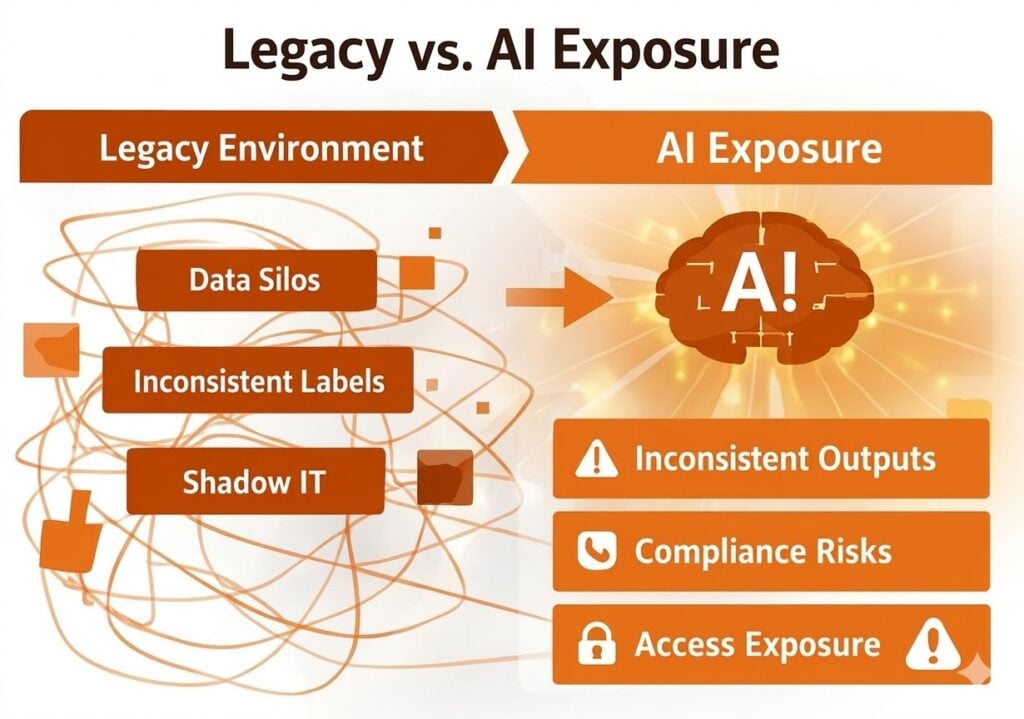
Figure 1: AI exposes hidden structural complexity within legacy environments.
The 60–80% Problem
Many enterprises still allocate the majority of IT budgets to maintaining legacy systems. That model was defensible when transformation was optional. It is no longer defensible when AI becomes core to competitiveness. Modernisation is no longer about performance or interface redesign. It is about enabling intelligent orchestration.
AI agents struggle across fragmented estates, shadow collaboration environments, undocumented integrations, and inconsistent policy enforcement. If the estate is not rationalised, AI becomes constrained by the very complexity it is meant to simplify.
Before going too far down the AI journey, organisations need to take a step back and get their information architecture in Microsoft 365 (M365) – particularly in SharePoint Online (SPO) and Teams – in order. Without the right foundations, AI could inadvertently expose sensitive information, leading to compliance breaches, reputational risks, or worse.
Brownfield Reality in Microsoft 365
AI vendors showcase greenfield productivity gains. But most enterprises operate brownfield Microsoft environments shaped by organic growth, M&A consolidation delays, department-driven Teams provisioning, hybrid identity complexity, and years of historical content with unknown sensitivity. Before Copilot delivers value, organisations must confront data discovery, sensitivity label maturity, retention alignment, and access governance rationalisation.
These are not clean-up tasks. They are AI enablement programmes.
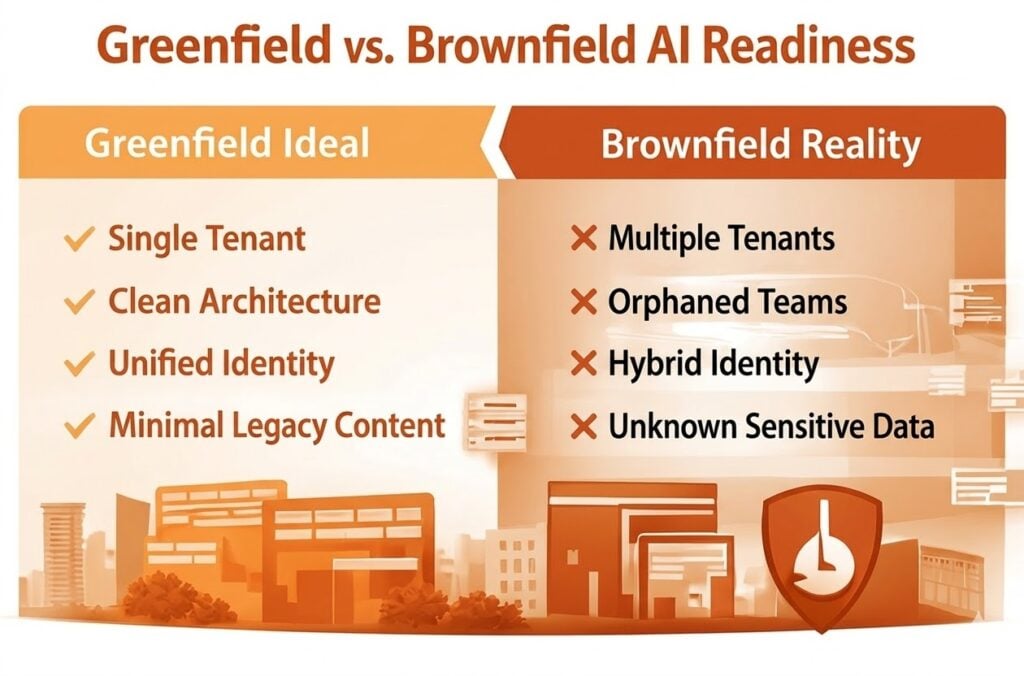
Figure 2: Greenfield promise versus brownfield enterprise reality.
AI Increases Governance Responsibility
AI introduces non-deterministic outputs. This shifts the assurance model.
Executives must understand how outputs were generated, what data influenced them, and whether compliance obligations were met. Information governance platforms such as Microsoft Purview become strategic infrastructure — enabling discovery, policy enforcement, insider risk monitoring, retention discipline, and audit readiness.
AI requires policy-driven architecture, not reactive compliance.
Agentic Interfaces Amplify the Need for Order
As agentic layers orchestrate user interaction across SharePoint, Exchange, Teams, and OneDrive, governance maturity becomes non-negotiable.
Abstraction does not remove responsibility. Sensitive data cannot surface without control. Legal holds cannot be bypassed. Retention cannot be optional.
AI does not eliminate compliance complexity — it centralises it.
Modernisation Is Now Strategic, Not Optional
Tenant consolidation, information architecture redesign, records management uplift, lifecycle governance, classification rollouts, and DLP enforcement have shifted from roadmap ambitions to AI preconditions. Organisations that rationalise their estate will unlock scalable AI adoption. Those that defer will find initiatives constrained by risk, audit, and data quality barriers.
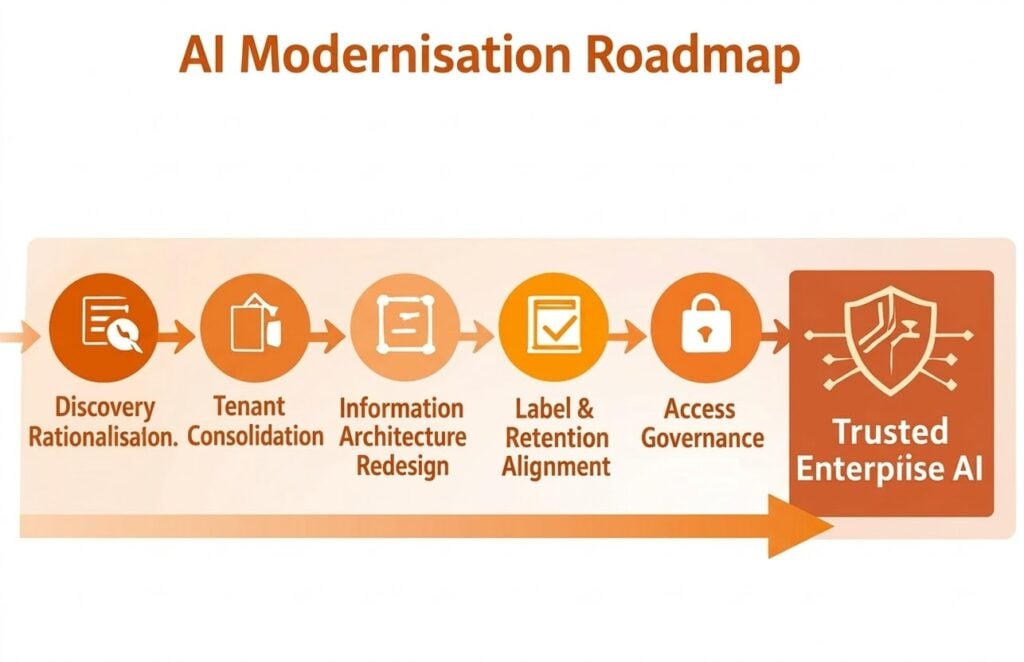
Figure 3: Modernisation as the pathway to trusted enterprise AI.
The Real Opportunity
AI is not primarily a tooling revolution. It is a forcing function for structural clean-up.
Enterprises that embrace this reality will reduce technical debt, strengthen audit posture, improve governance maturity, accelerate safe AI adoption, and increase enterprise agility.
Modernisation is no longer IT hygiene. It is competitive readiness and deferral is no longer viable.
Where to Start: Advisory Before Acceleration
AI readiness does not begin with tooling. It begins with architectural clarity. Before deploying Copilot broadly or introducing agentic workflows, organisations need a structured view of their information estate. That means understanding where data resides, how it is classified, who can access it, and whether retention and compliance controls are operating as intended.
This is where an Insentra Information Architecture Advisory provides immediate value.
In a focused engagement, we:
- Assess data discoverability and classification maturity
- Review tenant sprawl and identity hygiene
- Evaluate retention, records, and lifecycle alignment
- Analyse access governance and external sharing controls
- Identify AI risk exposure across Microsoft 365
The outcome is not a theoretical roadmap. It is a practical, prioritised modernisation pathway aligned to AI enablement, identifying what must be rationalised before AI scales safely and what can be accelerated immediately.
For organisations further along, the Advisory transitions into structured uplift programmes such as:
- Tenant consolidation and architecture redesign
- Sensitivity labelling and DLP enforcement
- Records and retention alignment
- Governance operating model refinement
- AI assurance and audit readiness frameworks
AI is a force multiplier. But it multiplies whatever maturity already exists. An advisory-led approach ensures it multiplies strength not structural weakness.
Learn more about our Advisory Services – designed to help organisations discover, classify, and govern their data before embarking on their AI journey.
Join our Generative AI Pathfinder session and learn how to build the right foundations in Microsoft 365 for safe, effective AI adoption. Register Now